Routine water use may gradually lead to more plumbing maintenance than expected. Homeowners across Noblesville often ask, “How does hard water affect plumbing?” when these recurring problems become difficult to ignore.
In this guide, Prime Plumbing & Drains will explain how hard water affects your plumbing system so you know when to call plumbers in Noblesville, IN.
What Makes Water Hard?
Hard water isn’t dirty or unsafe to drink. It simply contains higher levels of calcium and magnesium than soft water does. These minerals come from the ground as water travels through soil and rock before reaching your home. The more minerals present, the harder the water becomes.
How Does Hard Water Buildup Form Inside Pipes?
If you are wondering, “How does hard water affect plumbing?” the process begins as dissolved minerals travel through your water lines. Some of these minerals settle on the interior surfaces of the pipes, forming a thin layer.
Continued exposure allows that layer to thicken. As the opening inside the pipe narrows, less water can pass through at one time, which may gradually reduce flow.
Where Mineral Deposits Become Visible
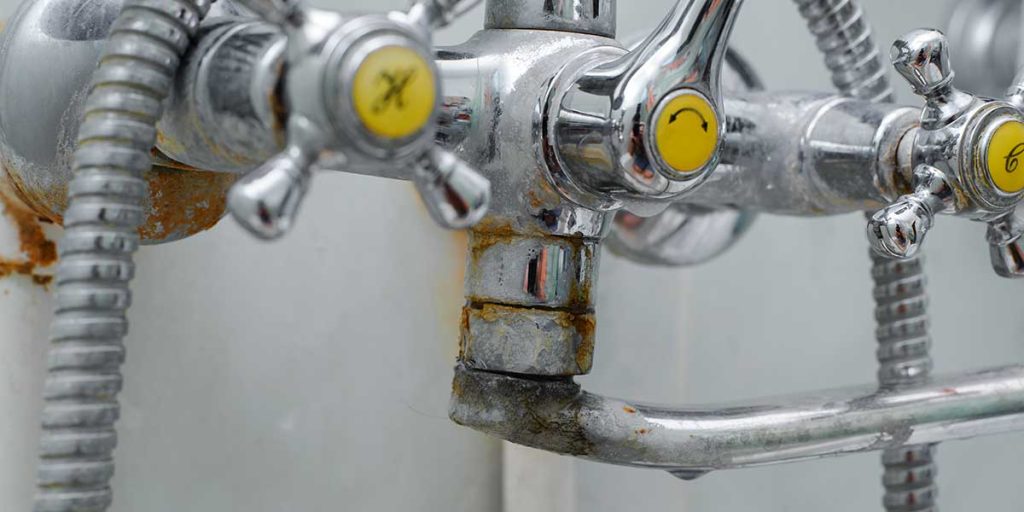
Mineral deposits also collect on fixtures and inside water-using appliances. These areas often reveal hard water problems before buildup inside the pipes becomes noticeable.
A chalky coating around a faucet or showerhead develops when mineral-rich water dries on the surface. Although this residue is visible, similar deposits may also form inside components that regularly come into contact with water.
Why Does Limescale Become Harder To Manage?
Limescale forms when dissolved calcium separates from the water and hardens into a deposit. Heat can accelerate this process, making water heaters particularly vulnerable to accumulation.
Once limescale hardens, routine cleaning may no longer remove it easily. Preventing ongoing mineral buildup is one reason you need a water softener, especially when hard water repeatedly causes issues with your plumbing equipment.
Why Older Metal Pipes Face Greater Scale Buildup
Aging metal pipes often develop rough interior surfaces as their condition changes over time. These uneven areas give hard-water minerals more places to collect than they would have inside a smoother pipe.
As deposits accumulate on already narrowed surfaces, existing flow problems may become more noticeable. Older plumbing may therefore experience weaker fixture performance sooner than newer piping exposed to the same water conditions.
Hard Water’s Impact on Water Heater Efficiency
Water heater efficiency drops when mineral buildup coats the heating element or tank interior. The unit has to work harder to reach the same temperature it once hit easily during normal daily operation. This extra strain can shorten the lifespan of your water heater. It can also raise your energy bills without any obvious explanation.
How Does Hard Water Affect Internal Fixture Parts?
Hard water can affect small internal parts long before visible damage appears. Mineral deposits may collect around faucet cartridges or shutoff valves, making them harder to operate smoothly. Seals can also wear faster when rough buildup forms along moving surfaces.
Over time, these changes may lead to dripping or difficulty controlling water flow. Addressing the source of the minerals can help reduce repeated wear on the components responsible for the fixture’s everyday operation.
Why Does Water Hardness Testing Help?
Because hard water is not always obvious, testing can confirm whether minerals are contributing to plumbing concerns. A basic hardness test measures the amount of dissolved calcium and magnesium in the water supply.
The results can help determine whether cleaning alone is enough or whether water treatment should be considered. Testing establishes a baseline that can be compared with later results after a treatment system is installed.
Simple Ways To Manage Hard Water at Home
Knowing how hard water affects plumbing can help you build habits that limit mineral deposits. Wipe fixtures regularly so residue does not harden, and schedule periodic plumbing inspections to catch buildup before it restricts water flow. These steps can limit visible residue and help identify internal buildup before it becomes more restrictive.
Take Control of Hard Water Problems With Prime Plumbing & Drains
Now that we have answered your question, “How does hard water affect plumbing?” the next step is determining how much mineral buildup has developed inside your system. A professional evaluation can identify whether hard water is affecting water flow or placing added strain on your water heater.
Drainage concerns may also arise, making it helpful to understand how a clogged drain can cause a leak. Call Prime Plumbing & Drains at (317) 210-4870 for service in Noblesville, Indiana.