Spring storms in Noblesville can leave yards soaked. This is good news for plant life, but if the moisture level builds around your home beyond a certain point, the underground plumbing may face challenging conditions.
One common question comes up during this season: “Can heavy rain affect plumbing?” In this guide, Prime Plumbing & Drains explains how prolonged rainfall can affect your system. Learn what to look for and when to consider professional plumbing services.
How Stormwater Runoff Reaches Your Home's Plumbing
During a downpour, stormwater runoff can rush across the property and collect in low areas. An overview of the basics of plumbing can help you understand how household drains connect to the pipes carrying wastewater away from the property.
Exterior drainage systems should be directing water away from the foundation. However, when the surrounding soil becomes saturated, excess moisture may collect around your home’s buried plumbing. As this groundwater increases, existing cracks or weak connections become more noticeable.
Warning Signs of Drain Problems After Heavy Rain
Can heavy rain affect plumbing? Yes, and the following issues may mean that storm runoff is affecting your system:
- Slow-draining tubs: Water that takes longer than usual to clear may indicate a drain line issue.
- New gurgling sounds: Unusual noises can occur when air has difficulty moving through the plumbing.
- Backups in low fixtures: Floor drains may show trouble first.
These plumbing changes can point to drain clogs or another obstruction that may require a closer inspection.
Sewer and Sump System Risks During Storms
Extended rainfall can increase the amount of water that drainage systems must manage. Sewer lines and sump pumps may each respond differently to these wetter conditions.
Sewer Line Backups
Heavy rain can contribute to backups when excess water enters a damaged line or the surrounding sewer system becomes overloaded. An existing blockage may further restrict wastewater flow.
A backup may appear through a low drain inside the home. Homeowners should be aware that sewage can contain harmful contaminants. Wastewater entering the property requires prompt attention from a plumbing professional.
Sump Pump Failure
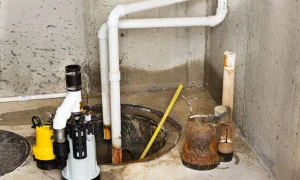
As groundwater rises, the home’s sump pump may run more frequently. If it cannot keep pace, the pit may overflow. A pump malfunction or blocked discharge line can further reduce the unit’s ability to move water away from the property.
Some moisture indicators may become noticeable before a larger basement flooding problem develops:
- Musty odors: Persistent smells may indicate moisture collecting in an enclosed area and harboring mold or mildew.
- Efflorescence: White mineral deposits can appear where moisture has moved through masonry.
Damp materials near or on the floor can also indicate that water has entered the basement.
Spotting Plumbing Leaks Due to Ground Saturation
Saturated soil can shift buried pipes and place added stress on vulnerable sections, such as weakened joints or small cracks. Homeowners will need to be aware of a potential plumbing leak after a storm. This problem may show up through obvious damp areas that remain after the surrounding ground begins to dry or through more subtle indicators like unexplained water use.
When To Call a Plumber
A plumbing professional should always handle certain storm-related problems:
- A sewage backup: Wastewater entering a home is an emergency because of possible contamination.
- A sump pump failing during a storm: A nonworking pump can allow groundwater to collect inside the property.
- A suspected hidden leak: Professional testing can help locate concealed damage without unnecessary digging.
How else can heavy rain affect plumbing? If you are unsure about the seriousness of a potential issue, do not wait to call a plumber. Many storm-related plumbing changes need prompt attention to protect your home from water damage.
Prime Plumbing & Drains Is Ready in Every Season
Prime Plumbing & Drains serves Noblesville homeowners with straightforward recommendations and upfront pricing. Call Prime Plumbing & Drains at (317) 210-4858 to schedule an inspection. If your unit is struggling during wet weather, you can also read our guide to common causes of a clogged sump pump discharge line.
Frequently Asked Questions
If you are still asking, “Can heavy rain affect plumbing?” the answers below may be helpful.
How Quickly Can Plumbing Problems Appear After Heavy Rain?
Some plumbing problems may appear during a storm, while others become noticeable after the rain saturates the ground.
Can Old Pipes Handle Heavy Rain As Well as New Ones?
Older pipes generally fare worse in heavy rain, since aging joints and seals may leak.
Does Homeowners’ Insurance Cover Storm-Related Plumbing Damage?
Coverage varies by homeowners’ policy, so it is worth confirming whether storm-related plumbing damage is included before bad weather arrives.